About Gridly
Gridly is an independent guide for Australian households. It helps them decide whether to buy a home battery, add solar, switch to an EV or change electricity plan. It explains the rebates and compares the plans on offer in each city. It also publishes suburb level data on solar and battery uptake, so people can see what their neighbours are doing.
It is a project we built and run ourselves. That is why we can publish the full numbers here rather than a rounded version with the client name withheld.
Where it started
A domain, a clear point of view and no traffic. The category is crowded with installer marketing and retailer comparison sites that earn a commission on whatever they recommend. The bet was that a site with no installer or retailer on the payroll, written in plain language and kept current, can rank against them.
The constraint was people. There was no writing team and no budget for one. Whatever got published had to be produced with AI or not at all. It also had to be good enough that a reader cannot tell.
What we did
We treated AI SEO as a production system rather than a content tool.
A ruleset before a single article. Every page is produced under a written editorial standard. Plain language, with every technical term defined on first use. Frequently asked questions answered in forty to fifty five words. At least two external sources cited per article. And a list of phrasings and habits that mark text as machine written. Drafts that break the rules do not publish.
We built pillars and clusters rather than a blog. The site is organised around a small number of pillar topics: home batteries, electricity plans, EVs and rebates. Each has a cluster of specific pages underneath that link back up. Before a new page is written, its target search is checked against what already exists so two pages never compete for the same result.
Programmatic pages from public data. The suburb pages and the city electricity plan comparisons are generated from government and regulator data. Nobody writes them by hand. Plan pricing comes from the open banking energy data feed and is refreshed monthly. Suburb solar and battery figures cite their source on the page. That is hundreds of useful pages that no team can write by hand.
Facts kept canonical. The federal battery rebate changed in May 2026 and the EV tax treatment is winding down on a schedule. Those facts live in one place, and every page that mentions them reads from it. A policy change is one edit rather than a hunt through the archive.
A daily production loop. New content is researched, drafted, checked against the ruleset and staged automatically each day. A person reviews it before anything goes live. It is the same workflow automation approach we use for invoices and orders, pointed at publishing.
Where it landed
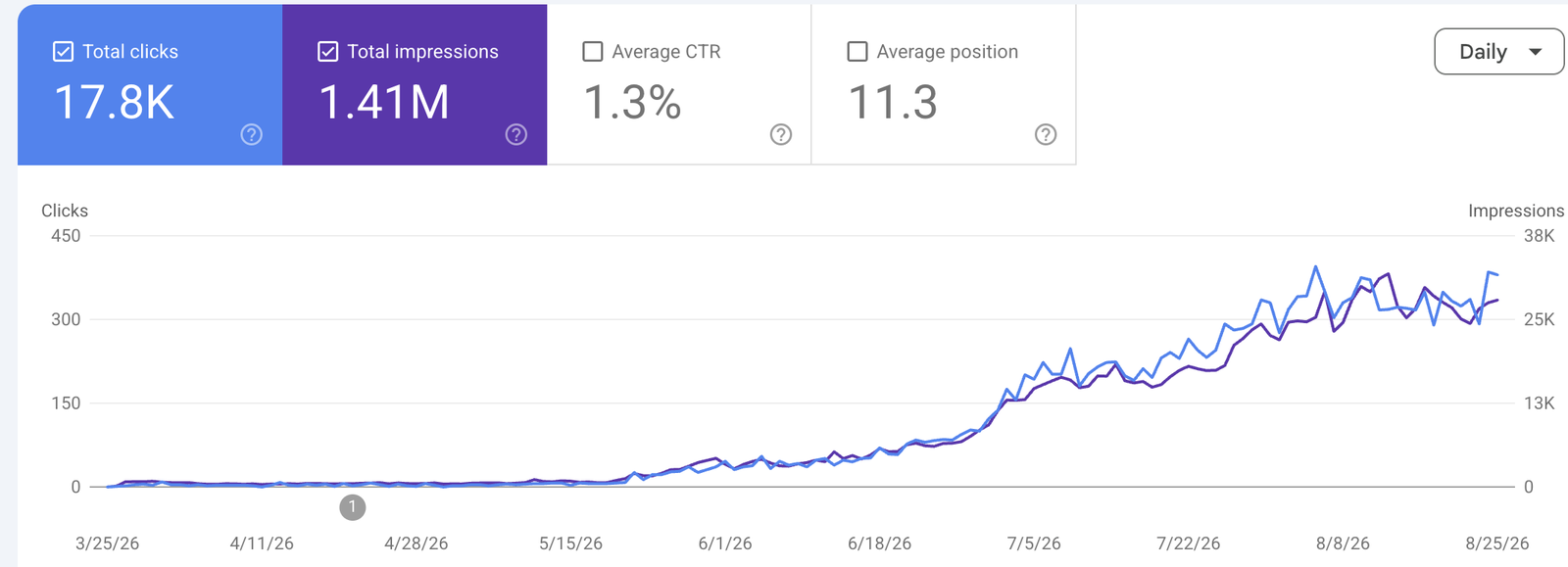
Within five months of launch Gridly was receiving around 400 unique visitors a day. That is a small site by media standards and a large one for a five month old domain with no paid promotion and no writing team. Over that period Google Search Console recorded 1.4 million impressions and almost 18,000 clicks, with the comparison and rebate pages doing most of the work.
The site earns nothing yet. The plan is installer referrals. The point of the first five months was to prove the audience exists before asking anyone to pay for it. If you are weighing the same kind of build for your own business, our pricing guide covers what the work typically costs.
Where it shows up in AI answers
In September 2026 Ahrefs counted Gridly pages in about 1,900 AI answers across 469 pages. 258 of those were Google AI Overviews, drawn from 123 pages. Copilot cited Gridly in 806 answers, Google AI Mode in 382, Perplexity in 197 and Gemini in 190. ChatGPT cited it in 17.
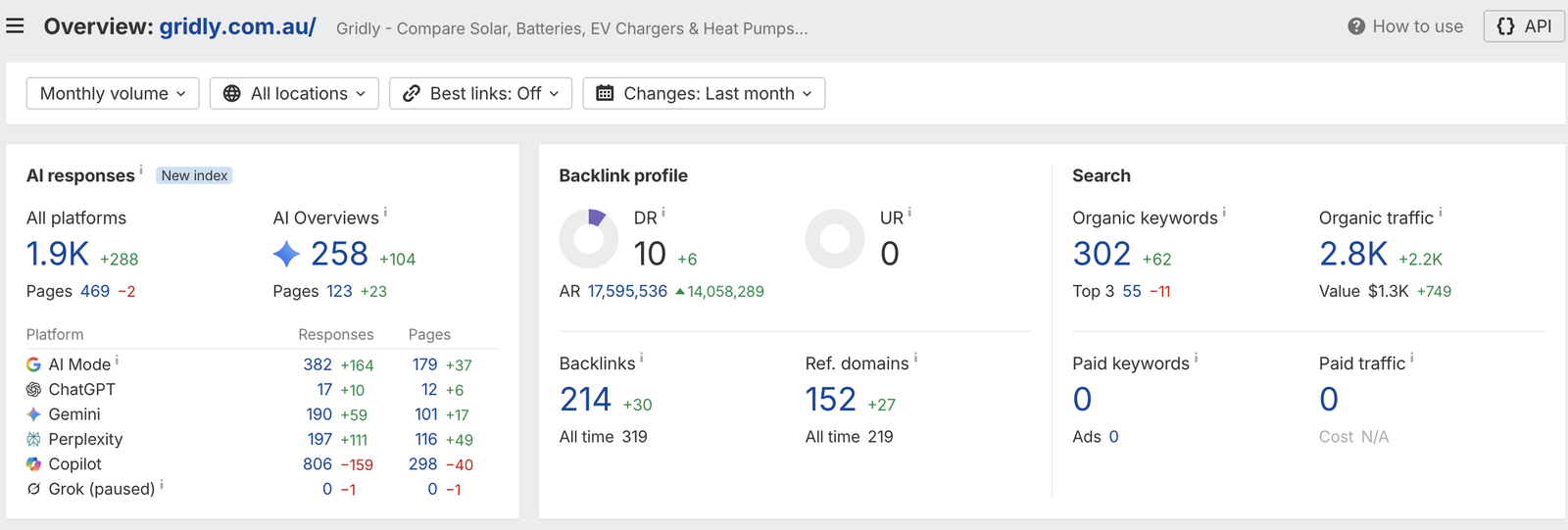
The domain rating at the time was 10, with 152 referring domains and no link outreach. The citations came from page structure and plain answers rather than from link authority. That is the case for AI SEO as we practise it. A question as the heading, the answer in the first sentences, a source for every number, and a cluster around it.
What we would do differently
We published the suburb data pages before the data quality checks were in place. We then had to go back and fix citations and stale figures across the set. The checks belonged in the first release.
We also built the monthly refresh for plan pricing and rebate facts after the first policy change caught us out. On a site whose value is being current, that automation belongs in the first week.